


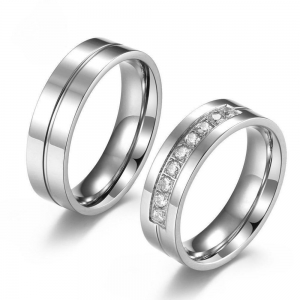
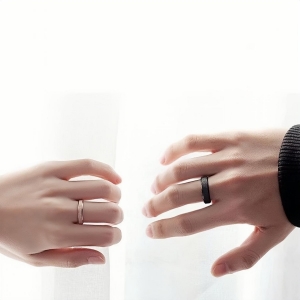












Diamond matching bracelet for couples is an exceptional gift. It is worn frequently and so choosing the right style for it is crucial. It doesn't matter if it's a beloved tennis-style diamond bangle, beautiful solitaire studs earrings, sparkling wedding or affordable promise couple rings, fine jewelry meant to stand out.
It's crucial to do research on the diamond quality of a fine piece of jewelry before you make a choice. A high-quality diamond will make sure that your new earrings or bracelets, rings or necklaces remain elegant and trendy for life. You can start your shopping journey with a guide to diamond quality, regardless of whether you want natural diamonds or lab-grown simulated diamonds. This guide will introduce you to the "4Cs", or four characteristics of diamonds. It also includes other things that should be considered when purchasing these stunning gems. You can learn how to determine the quality of a diamond couple necklaces from a lesser-than-optimal diamond by reading on.
The 4Cs: Cut, Carat, Color and Clarity.
Color
Diamonds are not always white. They can be different shades of white or even colored. The Gemological Institute of America's (GIA) official color scale is the standard for measuring a diamond’s color. This scale gives diamonds a colorless grade - which is a crystal clear stone with no color at all - up to a noticeable color grading - where the stone has a yellow tint. Diamonds near the colorless end are usually rarer and have a higher value.
But diamonds in color can also be a deliberate choice to match the style. Although white diamonds are a popular indicator of quality, this shouldn't be your only deciding factor. For example, a beautiful canary-yellow diamond can be regarded as a superior diamond to its other sunny-hued cousins. It is therefore suited for use in ring settings or pendants. A diamond can also be colored with other colors, such as a rose pink or a deep emerald.
There are several multi-stone settings that can be used. Some settings, like the classic solitaire, emphasize one central stone. However, new design trends offer a wide variety of options. Consider how a colored stone will (or could!) interact with other stones when choosing one. Create your dream jewelry piece by combining the stones surrounding it. Would you prefer a clear center stone with a few touches of color surrounding it? What about a center stone that is a soft color with darker accent stones around it? There are many interesting ways colored and uncolored stone can be combined in diamond and alternative jewelry. So don't restrict your diamond shopping only to white stones.
Clarity
As they form, mined stones are at mercy of the bedrock surrounding them. Fractures can occur due to variations in the soil, the pressure or even the treatment and cutting procedure used to make the diamond. The damage and fractures can be invisible to the naked eye, but some of them are only visible under a magnifying glass or a microscope.
The letter-number scale of clarity for diamonds is used to indicate the grade.
The "FL" grade is the highest, and refers to a flawless diamond. This means that there are no visible flaws on either side of the diamond, even under 10x magnification. These diamonds can be very expensive and are extremely rare.
As you move down the scale, VVS1 represents "Very Very Lightly Included," and VVS2 is a higher degree of inclusion. This means that while a diamond has flaws, they are very difficult to see by a trained grader.
You'll see the VS1 & VS2 grades, which are "Very Slightly Inclusions" and drop the "very". It's easy for a trained grader, to spot these when magnified. A grader who is not trained may miss one or more inclusions in this range, depending on where the flaws are located and the shape of the diamond.
This is the level at which flaws are most easily visible under magnification. This is the area where the flaws start to be visible without magnification.
The stone's structural integrity may be affected by flaws which are visible without magnification. These are not necessarily "bad" stones, but they can be easily spotted. Even I3-grade diamonds are beautiful when used in the right setting.
Diamond cutters "work around", or minimize, flaws in mined stones by adding extra faces or cutting them a particular shape or size. Finding a mined diamond with a minimal amount of these issues and finding a skilled gem cutter to finish the stone is extremely difficult, which is why Couplesets(tm)alternatives are incredibly popular. Diamond simulants eliminate the variables and inclusions which cause flaws to mined stones. The result is that each diamond alternative stone has a rating of "Integrally Flawless".
Cut
The cut of the diamond is an important factor when determining its quality. The cut of a diamond is officially measured by the GIA scale for diamond cuts, which includes six distinct grades. The cut of a diamond can vary in quality depending on how it is cut out of the stone. The cut will determine how "sparkly' the finished stone looks, as well as how high or low the stone is placed within the setting. It will also set the tone of aesthetics.
Shape is an important aspect of a diamond that's often confused with its official cut scale. While there are many classic diamond ring styles that are still in demand, newer, more trendy designs are also slowly making their way into the mix. Round Diamonds remain the most common shape of diamond, but the "fancy shape" category encompasses all other shapes.