












The four-season system in Forza Horizon 6 is not merely an environmental feature. Within the game's economic framework, changing seasons can influence what players do, what rewards become available, and how desirable certain vehicles become.
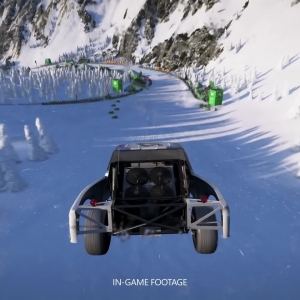
The fictionalized Japanese setting provides a natural stage for this system. Spring can transform the landscape with blossoms, while winter can introduce snow and more difficult driving conditions. But the visual transformation is only part of the effect. Seasonal rotations also determine the structure of weekly challenges and rewards.
Each new weekly Festival Playlist creates a temporary economic cycle.
Players receive challenges that encourage them to participate during a particular seven-day period. Some rewards are exclusive vehicles, and limited availability can create scarcity. Once the week ends, the immediate supply of those vehicles may decline.
This means that the calendar becomes an economic variable.
A player who only thinks about today's garage may immediately sell an exclusive reward. Another player may consider the possibility that the car could become more desirable later. Neither approach is automatically correct, because future demand is uncertain. That uncertainty is precisely what makes speculation possible.
The first stage of the supplied strategy is accumulation. During the initial release period, many players obtain the same vehicle. Sellers flood the Auction House, creating a relatively large supply. Prices may consequently be lower.
A speculative player can interpret this period as a buying opportunity.
The second stage is hoarding. Vehicles purchased during the supply-heavy period are stored instead of being resold. Each vehicle removed from the marketplace reduces the number currently available to buyers.
The third stage is liquidation. If the vehicle becomes difficult to acquire and demand remains strong, owners can begin listing their stored examples.
This is essentially a virtual inventory cycle.
However, successful speculation requires more than simply predicting scarcity. Players must understand why people will want the vehicle later. A rare model with little practical or aesthetic appeal may never become particularly valuable.
This is where community behavior becomes crucial. A new drift technique can increase demand for one car. A viral video can suddenly make another vehicle famous. A competitive event can cause players to search for specific performance characteristics.
Such trends can happen quickly.
Consequently, the marketplace can behave more like a constantly changing information network than a traditional dealership. Players are not simply comparing horsepower and acceleration. They are monitoring what other players are doing.
This economic behavior also intersects with Forza Horizon 6 Modded Accounts as a broader concept of accelerated progression. Players interested in maximizing their resources may look for efficient ways to earn credits and acquire valuable assets through legitimate gameplay. The more quickly players can establish financial stability, the sooner they can participate meaningfully in higher-value parts of the marketplace.
Yet the game also deliberately creates friction. Early progression requires players to earn localized qualifier wristbands before reaching Legend Island. This prevents immediate access to everything and gives the economy a sense of progression.
Scarcity is therefore not limited to vehicles. It can exist in the player's access to resources, property, and opportunities.
The Estate represents a late-stage expression of accumulated wealth. Once a player has built sufficient capital, they can invest in property and create a showcase for their most valuable vehicles. The transition from a modest beginner's garage to a customized estate provides a visual representation of economic progress.
This creates a satisfying loop: seasonal activities generate opportunities, opportunities create rewards, rewards create assets, and assets can become the foundation for future investment.
The system also encourages players to think beyond individual races. A weekly challenge is no longer merely something to complete for immediate rewards. It can become the beginning of a longer economic strategy.
FH6 Credits for sale thus demonstrates how environmental design, seasonal content, and economic mechanics can reinforce one another. The changing Japanese landscape provides atmosphere, while the changing reward structure provides scarcity.
The seasons may last only a short time, but their economic consequences can potentially remain in the marketplace long after the weather changes.