


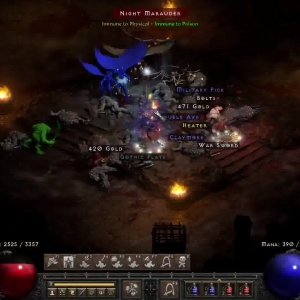










Few remasters face expectations as intimidating as those surrounding Diablo II: Resurrected. Diablo II is not simply an old video game that happens to be popular. It is one of the foundational works of the action-RPG genre, a title whose systems, atmosphere, and item economy influenced games for generations. Updating such a game creates a dangerous paradox: modernize it too aggressively and you lose its identity; modernize it too little and the result feels obsolete.
Resurrected found a remarkably effective middle ground.
The secret is not merely visual quality. At first glance, the remaster seems like a straightforward transformation from old two-dimensional artwork into detailed modern graphics. Characters are rendered with greater definition, environments contain substantially more visual detail, lighting is dramatically improved, and monsters look considerably more intimidating. But beneath those changes, the original game's mechanical structure remains central to the experience.
This is the essence of the dual-engine approach. The developers did not simply reinterpret Diablo II's rules through a new engine. They preserved the original logic while building a contemporary rendering layer capable of presenting those rules on modern displays. The result is a fascinating hybrid in which twenty-first-century graphics coexist with gameplay principles originating in the year 2000.
For players, the difference can be subtle but profound. An action-RPG is built around rhythm. A character does not merely attack; the attack occurs according to a particular sequence of animation frames and timing rules. A spell does not simply activate when a button is pressed; its effectiveness depends on casting speed, animation behavior, positioning, and other interconnected systems. Enemy movement and collision similarly affect how combat unfolds.
If these systems were casually rewritten, the game might become smoother or more contemporary while simultaneously becoming less authentic.
Resurrected avoids that trap by respecting the old mechanical foundation. This explains why experienced Diablo II players can immediately recognize the rhythm of combat. The game may look dramatically different, but it behaves like the familiar world they remember.
The legacy graphics toggle makes this concept especially visible. With a simple switch, players can see the original visual presentation return. This is not merely a nostalgic bonus. It is evidence of the game's architecture. The classic and modern presentations can coexist because the underlying gameplay has not been discarded.
Such a feature also changes how players think about remastering. Usually, a remake asks the audience to trust that the new version captures the spirit of an old game. Resurrected can demonstrate its relationship with the original directly. Players can compare the two presentations almost instantly, moving from modern Sanctuary to the classic visual world and back again.
Audio preservation follows a similar philosophy. Diablo II's sound design is deeply embedded in player memory. The distinctive noises associated with weapons, treasure, monsters, environments, and important encounters help establish a sense of place. Music is equally important. The haunting atmosphere of the Rogue Encampment, the tension of underground areas, and the dramatic sounds of major battles form part of the game's emotional vocabulary.
Rather than replacing this identity with a completely new soundtrack, the remaster preserves and enhances the original audio. Modern players can therefore benefit from improved clarity and contemporary surround-sound systems without losing the sonic character that longtime fans recognize.
The interface received modernization as well, but the changes are carefully focused. Text is easier to read on modern displays, menus are cleaner, and item comparison is more convenient. These improvements address genuine technical limitations created by the passage of time rather than attempting to redesign Diablo II into a different game.
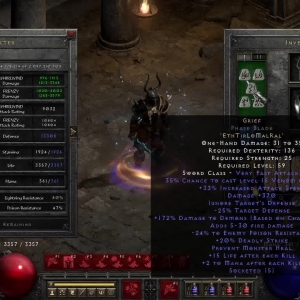
This distinction becomes especially meaningful when dealing with the game's enormous collection of equipment. The search for powerful gear remains one of Diablo II's central motivations. Players can spend hours defeating monsters, examining drops, developing builds, and chasing increasingly valuable combinations. Communities discussing D2R Items Items continue to demonstrate how important the game's original itemization philosophy remains.
Modern quality-of-life improvements also show restraint. Automatic gold pickup, for example, removes a repetitive task without eliminating meaningful decision-making. The player still has to decide what equipment is worth keeping and how to manage limited inventory space. The game becomes less physically tedious without becoming fundamentally automated.
Online infrastructure represents another area where modernization was necessary. The original game's online environment was designed for a very different internet. Contemporary networking expectations are substantially higher, and security concerns have evolved considerably. Resurrected therefore brings the classic experience into a modern service framework rather than forcing an old online architecture to carry the entire burden.
Cross-progression further illustrates this modernization. Players can continue their characters across supported platforms, making the experience more flexible than the original PC-focused release. This does not change the core gameplay, but it changes how easily players can access it.
That may ultimately be the defining achievement of Resurrected. It understands that accessibility and authenticity do not have to be enemies. A player can Diablo 2 Resurrected Items or pursue the game's progression naturally, experiment with builds, collect rare equipment, and explore Sanctuary while enjoying technology that would have been unimaginable when the original released.
The remaster therefore provides a useful model for the wider gaming industry. Developers do not always need to rebuild classic games from the ground up. Sometimes the better solution is to preserve the original heart and construct a modern body around it.
Diablo II: Resurrected succeeds because it recognizes that the passage of time has not invalidated the original design. The technology needed updating. The game itself did not need replacing.